Part I · Atrani and Amalfi
The Village
Two faces of the same Mediterranean coin: Atrani, intimate and vertical like a dream carved in rock; Amalfi, a majestic maritime republic founded in 839 AD, the oldest in Italy. Between the two, 750 steps bind centuries of history.
568 – 591 AD
Atrani, the Castrum by the Sea
A Byzantine castrum built against the Lombards, later the seat of the Amalfitan ducal court with the exclusive right to elect the heads of the Republic. The name "Atranum" evokes a cavern enclosed by the sea: a hollow in the cliff face where history has layered itself over millennia.
The smallest village in Italy. The densest with memory.
839 AD
Amalfi, the Maritime Republic
The oldest maritime republic in Italy dominated trade between East and West for three centuries. Two immortal legacies: the Tabula de Amalpha, the first European maritime code, and the perfection of the compass rose — the instrument that opened the way to the great voyages of exploration.
11th century · Symbol of a Republic
The Cross of Amalfi
The blue flag bearing the white octagonal cross was the symbol of the Maritime Republic of Amalfi from at least the 11th century. This cross, today known as the Maltese Cross, is in fact of Amalfitan origin and should more correctly be called the Cross of Amalfi.
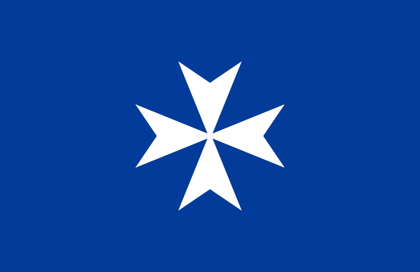
Of Byzantine origin, dating probably to the 6th century, the eight-pointed cross was adopted by the Order of the Knights Hospitaller of St John, founded around 1048 by noble Amalfitan merchants in Jerusalem.
The eight points represent the eight duties of the knights: to live in truth, to have faith, to repent of sins, to be humble, to be just, to be merciful, to be sincere, and to endure persecution.
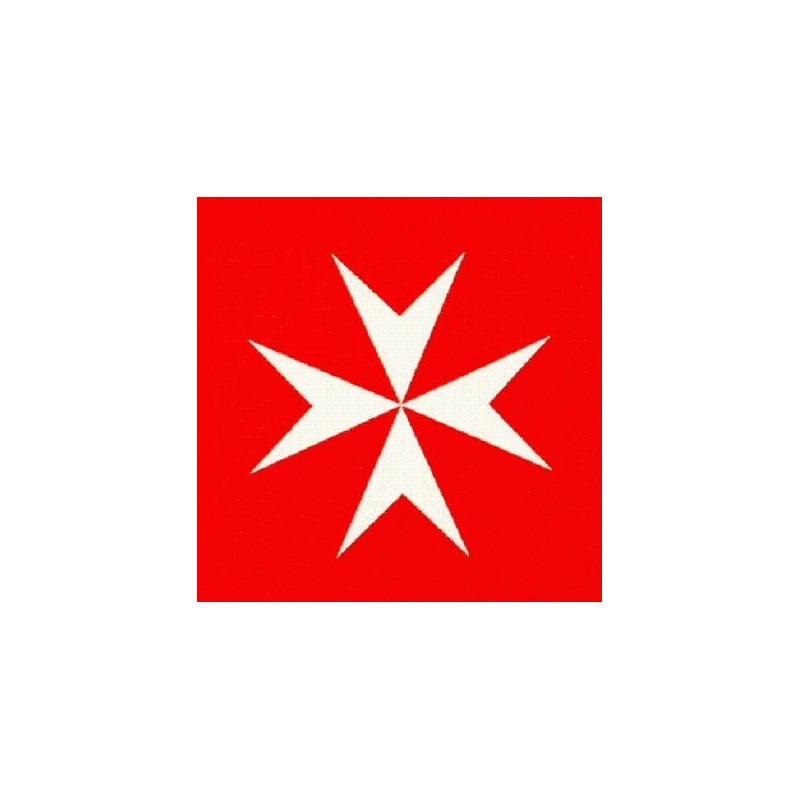
The red Maltese Cross — the evolution of the Amalfitan symbol adopted by the Order of St John
12th – 13th century · Vernacular architecture
The Tower-House and the Built Landscape
The Gargano tower-house — today Casa Masaniello — is the emblem of Atranian architecture: volumes pressed against the rock, south-east facing openings, lime-washed walls. An urban system that grew over centuries following only the logic of rock and sea.

The form
Tower-House
Vertical volumes against the cliff face, internal staircase as a spine, openings facing the sea and the light.
The colour
Lime White
Traditional render that reflects the heat and visually binds the village into a single white volume.
The landscape
Lemon Groves & Terraces
Dry-stone walls that transform vertical rock into productive terracing. The Amalfi sfusato lemon as an identity crop.
Part II · The gaze widens
Around
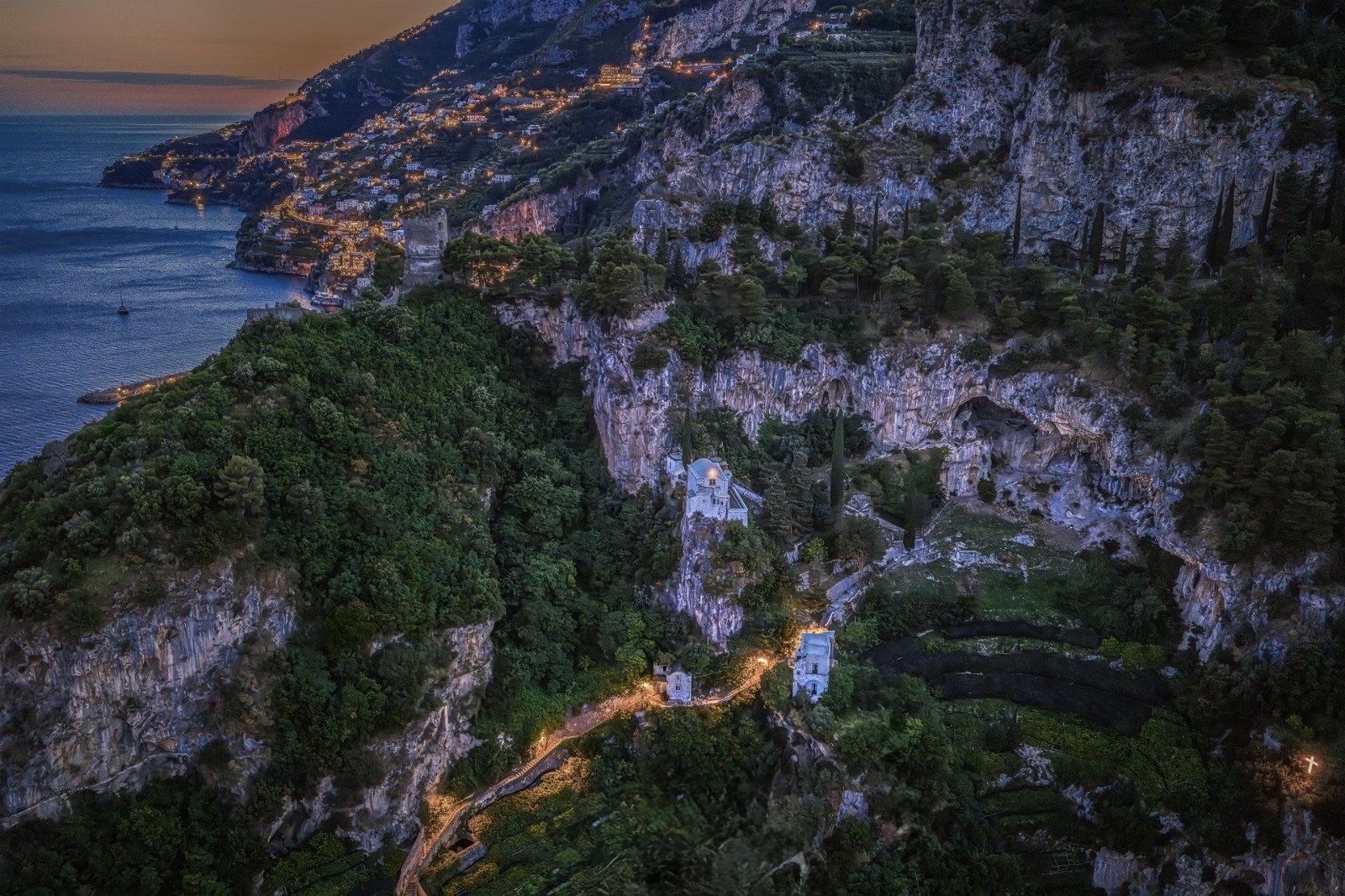
From Casa Masaniello the gaze never rests. It stretches toward the tower above, the sanctuary alongside, Ravello to the east, the Mediterranean below. Every point on the horizon is a story.
Above · Monte Aureo
The Torre dello Ziro
On Monte Aureo, the Norman prison-tower keeps watch over Atrani and Amalfi. In the early 16th century it imprisoned the Duchess of Amalfi — guilty of having loved a man not of noble birth. An aristocratic rebellion, a counterpoint to Masaniello's popular defiance.
Noble tower, fisherman's house, mystic sanctuary: a vertical geography of power, passion and faith.
Adjacent · Santa Maria del Bando
The Sanctuary and the Caves
Documented in 1187, the Sanctuary of Santa Maria del Bando proclaimed the republic's edicts. In the adjacent caves, San Saba of Collesano (910–995) left traces of his hermitic life: stalactites, glazed oil lamps, a marble basin linked to hagiographic miracles.
Sanctity and resistance merge in the rocky half-light.
To the east · Ravello
The Terrace of Infinity
Looking east, Ravello rises along the ridge. Villa Cimbrone, the Terrace of Infinity: marble busts silhouetted against open sky, ten kilometres of colour — yellow lemons, blue sea, green terraces.
You can see it every day from Casa Masaniello. From the balcony, from a window, while showering in the garden.
Below · The Mediterranean
The Sea as Presence
From Casa Masaniello the Mediterranean is not a backdrop — it is a living presence that changes colour with the hours and seasons.
The sea that Escher gazed upon. That the Normans sailed. That Masaniello knew as a fisherman.
“The most beautiful place I have ever seen in my life.”— Greta Garbo, on the Terrace of Infinity at Villa Cimbrone